 Boer History
Early Dutch outpost at the Cape of good hope
The Dutch East India Company (VOC) - Decision to Create an outpost at the Cape
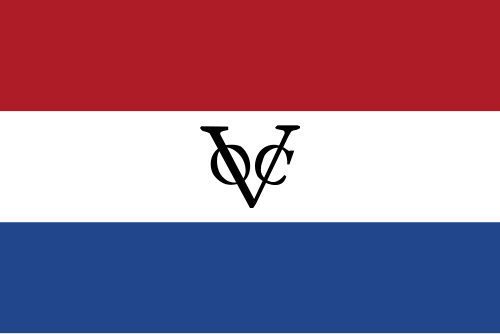
The Dutch East India Company (VOC), chartered on March 20, 1602, by the States-General of the Netherlands, became the pioneering model of a joint-stock company, fusing commercial ambition with state-like powers to dominate the lucrative spice trade. With an initial capital of 6.4 million guilders from investors, the VOC rapidly expanded into a maritime giant, operating a fleet exceeding 150 ships and employing up to 50,000 personnel across Asia. It secured monopolies on routes to the East Indies, establishing fortified entrepôts in places like Batavia (modern Jakarta), Malacca, and Ceylon, where Dutch factors bartered for cloves, nutmeg, and pepper amid fierce rivalries with the Portuguese and English. The company's innovative structure—issuing shares, bonds, and even its own currency—fueled Amsterdam's Golden Age prosperity, but the perilous 15,000-kilometer round trip around Africa strained resources, as crews battled scurvy, storms, and supply shortages that could wipe out profits from a single voyage.
By the 1630s, the VOC's empire spanned from Japan to the Cape, yet logistical bottlenecks persisted, with mortality rates on passages reaching 20-30% due to vitamin deficiencies and contaminated water. Directors in Amsterdam, including figures like Pieter de Carpentier, prioritized efficiency to maintain the company's 18-40% annual dividends, diversifying into silk, porcelain, and tea while suppressing interlopers through naval blockades and treaties. The Anglo-Dutch Wars of the 1650s loomed, heightening the need for secure waystations, as English competitors eyed the same routes. Internal audits revealed that delays in Batavia from ill crews cost millions in guilders annually, prompting calls for midway resupply points. The Cape of Good Hope, first circumnavigated by Bartolomeu Dias in 1488 and mapped by Portuguese explorers, stood out for its temperate climate and natural harbor, though earlier attempts at temporary stops had faltered due to unreliable fresh provisions.
In March 1647, the VOC vessel Haarlem (or Nieuw Haarlem), en route from Batavia to Amsterdam with a cargo of spices, ran aground in Table Bay due to navigational errors amid rough seas. Under Captain Leendert Janz (or Janszen), the 200-strong crew salvaged cannons and goods, establishing a fortified camp on the shore while awaiting rescue. Over nearly four months, they planted wheat, barley, and vegetables from the ship's stores, which flourished in the fertile soil of the Liesbeek Valley, and bartered copper and tobacco with local Khoikhoi herders for fresh meat and milk, averting starvation. No lives were lost to famine or attack; instead, the survivors explored the peninsula, noting abundant water from the Fresh River and grazing lands suitable for cattle. Rescued in July by the Domburg, Janz and officers like Nicholas Provoost submitted a report to the VOC's Amsterdam chamber, vividly describing the Cape's potential as a "garden for the fleet" and urging a permanent outpost to serve as a halfway refreshment station, free from the isolation of St. Helena.
The Haarlem incident tipped the scales for the VOC's long-debated expansion southward. Directors, influenced by the report's practical optimism and corroborated by earlier explorer accounts like those of Frederick de Houtman in 1595, approved the venture in July 1651 to address the "great loss of men and ships" from scurvy-plagued voyages. Unlike trading forts in Asia, this would be a non-commercial victualing station, focused solely on provisioning to boost fleet efficiency and reduce insurance costs. Jan van Riebeeck, a 43-year-old surgeon-turned-merchant with prior service in Asia, was appointed commander, assembling a modest expedition of 118 souls—mostly Dutch, with Germans and Scandinavians—aboard three ships: the Dromedaris, Reijger, and Goede Hoope. Departing Texel on December 24, 1651, they carried seeds, tools, and instructions to erect a defensible fort, cultivate gardens, and trade peacefully with Khoikhoi without enslavement or conquest, reflecting the VOC's aversion to costly colonial entanglements.
Jan van Riebeeck: Early Life and Entry into the VOC
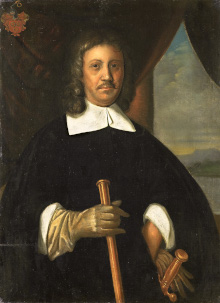
Jan van Riebeeck, originally Johan van Riebeecq, was born on April 21, 1619, in the Dutch town of Culemborg in the province of Gelderland. The son of Anthony Jansz van Riebeeck, a surgeon who passed away when Jan was still young, he grew up in modest circumstances without significant inheritance to secure his future. Receiving only a basic education, van Riebeeck turned to the medical field, leveraging his father's profession to enter the Dutch East India Company (VOC) in 1639 at the age of twenty. As an assistant surgeon, a role prized in the era for treating shipboard ailments like wounds, fevers, and scurvy, he embarked on his first voyages, quickly immersing himself in the company's vast maritime network. This entry point was common for young men with practical skills, offering adventure and opportunity amid the VOC's expanding empire, though it demanded resilience against the perils of long sea journeys.
Van Riebeeck's early years with the VOC propelled him across Asia, showcasing the company's intricate web of trading posts from India to the Spice Islands. After initial stints handling spices and goods in Batavia—the bustling administrative hub on Java, where nutmeg, cloves, pepper, silks, and Chinese porcelains flowed through depots—he was posted in 1643 to Dejima, an artificial island off Nagasaki in Japan. There, the Dutch enjoyed exclusive European trading rights after the Portuguese expulsion, bartering woolens, metals, and curiosities for Japanese silver, copper, and lacquerware under strict isolationist policies. By 1645, he advanced to head the station in Tonkin, northern Vietnam, a vital source of silk and ceramics, navigating local politics and rivalries. However, his promising trajectory halted abruptly when he was implicated in private trade—a widespread but forbidden practice that siphoned from VOC profits due to meager salaries. Detected in 1648, van Riebeeck faced dismissal, a substantial fine, and forced return to the Netherlands.
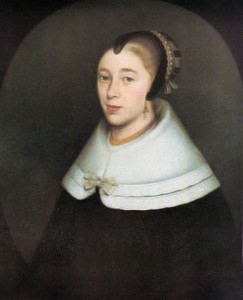
In the wake of his professional disgrace, van Riebeeck found personal stability through marriage to Maria de la Queillerie on December 28, 1649, in Schiedam, Netherlands. Born in 1626 in Valenciennes (then part of the Spanish Netherlands), Maria was the daughter of a wealthy French Huguenot merchant and winemaker, Abraham de la Queillerie, who had fled religious persecution. Educated and resilient, she brought social standing and emotional support to van Riebeeck's uncertain life, bearing their first child, Abraham, shortly after the wedding. The couple would have eight children in total, though only four survived to adulthood, reflecting the era's high infant mortality. Maria's Huguenot heritage instilled a Protestant work ethic, and her dowry provided modest financial relief during van Riebeeck's unemployment. When he sought reinstatement with the VOC, Maria stood by him, accompanying the family on perilous voyages and contributing to household management amid the company's demanding postings.
Reinstated by the VOC in 1651 despite his past infractions, van Riebeeck was appointed commander of the Cape expedition, departing Texel on December 24 with Maria, their young children, and a crew of about 118. Arriving in Table Bay on April 6, 1652, he oversaw the founding of the refreshment station, erecting Fort de Goede Hoop and initiating gardens that Maria helped tend, blending her knowledge of European horticulture with local conditions. After ten years at the Cape, where the outpost evolved into a burgeoning colony, the family returned to Batavia in 1662, where van Riebeeck rose to governor-general until his death in 1677. Maria predeceased him in 1664, buried in Batavia.
The Arrival of Jan van Riebeeck to the Cape of Good Hope
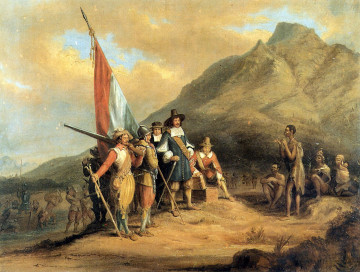
The 104-day voyage from Texel culminated on April 5, 1652, when Jan van Riebeeck's Dutch East India Company fleet sighted the Cape of Good Hope. This efficient crossing qualified the officers for a £50 bonus by beating the VOC's 120-day standard, significantly reducing the mortality rates that typically plagued such journeys. The Dromedaris, Reijger, and Goede Hoop sailed northward along the African coast under partly cloudy skies, with crews fatigued by scurvy and monotonous salted rations. Only two deaths occurred on the flagship—a surgeon's young child and a carpenter already ill before departure— a low number compared to norms, though many endured symptoms like bleeding gums and joint pain from vitamin deficiencies. Rigorous hygiene practices had contributed to this outcome, fostering cautious optimism as the expedition prepared to establish a critical resupply station for East Indies voyages.
In the late afternoon, during the fifth hour of the watch, the Dromedaris's chief mate spotted Table Mountain's distinctive flat-topped profile about 100 leagues to the east, earning a 16-shilling reward. A cannon fired in celebration, flags were raised to alert the trailing ships, and faint cheers spread across the decks—voices weakened by scurvy but heartened by the sight of land after months at sea. First documented by Portuguese explorers nearly two centuries earlier, the mountain served as more than a navigational aid; it symbolized the strategic base the VOC sought to create, one that would address the "great loss of men and ships" from disease-ridden passages.
As evening approached, the fleet moved closer to the southern entrance of Table Bay, navigating gentle swells while confirming their latitude at 34°20' S. Van Riebeeck held a council meeting to assess the bay's suitability, noting potential concerns like drought-affected streams but reaffirming the mission to develop a provisioning hub. The officers, motivated by the bonus and their success in maintaining crew health, reflected on the voyage's challenges, while Maria de la Queillerie shared thoughts of home, her resilience mirroring the group's determination. With sails reduced, the ships held position in the calm conditions, awaiting daylight for secure anchoring.
At dawn on April 6, 1652, the anchors dropped into Table Bay's calm waters, securing the Dromedaris, Reijger, and Goede Hoop after the sails were furled, ending the ocean's constant motion. Protected from southeasterly winds by surrounding terrain, the bay provided the crews with their first stability, shifting its role from temporary stopover to foundation of Dutch operations in southern Africa. Van Riebeeck's team of 90—sailors, artisans, and family members—now focused on land-based tasks, the morning air charged with purpose as they began to claim the site for the VOC's maritime goals.
Small boats were quickly launched to survey the shoreline for optimal landing points and fresh water sources. The assessment was promising: fertile land extended invitingly, with streams available to replenish supplies and aid those suffering from scurvy, whose bodies still showed the voyage's effects. These findings were crucial, validating the Cape as a midway station for Indies fleets and preventing further health declines among the exhausted group.
During the midday council on the flagship, van Riebeeck outlined plans for a basic wooden fort to secure the area, emphasizing the need to unload tools, timber, and provisions swiftly for construction. Energized by solid ground, the sailors and soldiers transported crates and barrels in longboats, free from the sea's sway for the first time in weeks. The scent of earth and salt brought relief, allowing freer movement as prospects of gardens and fresh produce offered hope for recovery from scurvy. By evening, tents were erected and initial work advanced, solidifying the outpost's beginnings under Table Mountain's silhouette.