 Boer History
Jan Van Riebeeck and his Family
Origins in Wijk bij Duurstede
South of Utrecht, where the Kromme Rijn meanders through lush meadows before joining the River Lek, lies the small historic town of Wijk bij Duurstede. An estate near the town was already linked to the name Alpherus van Rietbeke in medieval times. Although the property is now known as Melkweg (Milky Way), it remained associated with the Riebeeck family for more than six hundred years. The surname appeared in numerous spellings over the centuries, including Rijebeedk, Rijdbeec, Ricbeke, Ricbeec, and eventually Rietbeek. The estate was frequently divided and changed ownership many times. Between the late Middle Ages and the seventeenth century, several families sharing the Van Riebeeck surname lived in both Wijk bij Duurstede and Utrecht. These families used different coats of arms. [2]
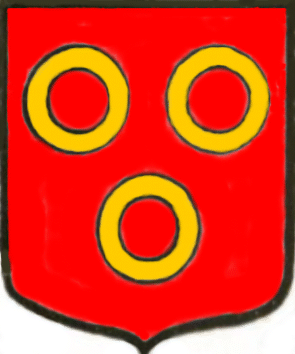
Jan van Riebeeck’s own ancestors used a coat of arms depicting three golden rings on a red background. They held several important civic and religious positions in Wijk bij Duurstede. Anthonis van Riebeeck, born around 1475, served as burgomaster and shortly afterwards as master of the local hospice, overseeing care for the sick. His eldest son, Jan, rose to become dean of the Chapter of St John, a community of canons attached to the still-Catholic St John’s Church. His second son, Wyer, became the direct forefather of Jan van Riebeeck. Court records show that Wyer served first as a schepen (alderman) and later as schepen-burgemeester. He married Weyn Joostendr. van Thienen, and their son Anthonis continued the family line. Like his father, this Anthonis held the offices of schepen and schepen-burgemeester. In the 1580s he married Margaretha van Ommeren. Their eldest son, Jan, was born around 1560 in Wijk bij Duurstede. [2]
The Culemborg Connection and the Career of Anthony Jansz van Riebeeck
The family’s link to Culemborg was forged when Jan van Riebeeck’s grandfather, also named Jan, married Geertruyd Hoevenaer around 1588. Geertruyd’s father was a successful brewer who held the positions of schepen and schepen-burgemeester in the town. Although the couple first settled in Utrecht, their eldest son Anthony was later registered as a citizen of Culemborg. Very few details survive about the early life of Anthony Jansz van Riebeeck, Jan van Riebeeck’s father. He worked as a surgeon in Culemborg from 1618 to 1622. At that time, surgeons were required to complete a three- to four-year apprenticeship under a guild before sitting a formal examination that tested both practical skills and theoretical knowledge. Candidates had to demonstrate the ability to prepare lancets, locate suitable veins for bloodletting, diagnose injuries and swellings, and correctly treat fractures. [2]
In Utrecht, where Anthony likely took his examinations, a trainee could sit the barber-surgeon examination after three years, followed by an additional year of practical experience before qualifying for the final bloodletting examination. The guild maintained strict professional standards for its members. There was a distinct separation between surgeons and university-educated physicians (doctores medicinae). Physicians, trained at institutions such as the University of Leiden or abroad, focused primarily on theory. Surgeons were not permitted to carry out major surgical procedures, such as the removal of bladder stones or cataracts, without consulting a physician. In 1618, shortly after beginning his practice in Culemborg, Anthony married Elizabeth Govertsdr. Her parents, Elisabeth Cornelis Anthonisdr and Govert Anthonisz, were well-regarded members of Culemborg society. The town, situated on the banks of the River Lek, had received its city rights in 1328, although the name “Kulenborch” first appears in documents as early as 1281. [2]
Culemborg in the Sixteenth and Early Seventeenth Centuries
The earliest known written reference to Culemborg identifies it as the name of the castle held by Lord Jan van Bosinchem. The castle was closely linked to the Barbara Church, originally dedicated to St Barbara before the Reformation. Located in the oldest quarter of the town nearest the castle, it had been recognised as a parish church since 1370. Another church, St John’s, which no longer stands, served the village of Lanxmeer until it was absorbed into Culemborg in 1400. By the time Jan van Riebeeck was born on 21 April 1619, Culemborg had developed into a thriving and active river town. Its elegant town hall, designed by the distinguished Flemish architect Rombout Keldermans, was completed in 1539. The Binnenpoort, the inner gate connecting Lanxmeer and the main town, was raised by an extra storey and decorated in 1557. [2]
The 1550s brought important political changes. Emperor Charles V elevated Culemborg’s status from a lordship to a county. In December 1555, the eighteen-year-old Count Floris I van Pallandt formally received the keys to the town. Although the first edict against heresy was proclaimed in 1523, Culemborg’s roughly 3,000 inhabitants experienced relatively little religious conflict in the early years of the Reformation. Only one resident, Koen Jansz, was executed in 1547 for discussing forbidden religious ideas. Despite initially denying the charges, he was tortured until he confessed and was then beheaded. As the Eighty Years’ War began, support for Lutheran and later Calvinist teachings steadily increased, even in Culemborg. In 1566, Count Floris van Pallandt allowed Protestant services to be conducted within the castle itself. [2]
The Iconoclastic Fury and the Maternal Family Home
With the Count’s consent, the Iconoclastic Fury (Beeldenstorm) reached Culemborg later that same year. In the Barbara Church, rioters destroyed all the altars, shattered the baptismal font, ruined the magnificent organ built by Jan Rose, and burned ecclesiastical vestments, relics, and service books. Van Riebeeck’s maternal relatives lived in a house at the corner of Achterstraat and Molenstraat, later called Binnenmolenstraat. The property stood near the Havenpoort, where five streets met. Govert Anthonisz, Jan van Riebeeck’s maternal grandfather, occupied the same house that had belonged to his own grandfather, Jan Thonisz, at the time of the Beeldenstorm. The earliest surviving record concerning the property dates from 1601. During the seventeenth century the corner house became known as “De Fonteyn”. Govert Anthonisz’s sons adopted different surnames. One brother of Jan van Riebeeck’s mother called himself Anthony Govertsz van Gaesbeek. Another was named Gerrit van Harn after his maternal great-grandfather. The last owner of “De Fonteyn” to carry the van Gaesbeek name was Jodocus van Gaesbeek. After his death, his widow Johanna van Goor bequeathed the house to the children of her second daughter, who had died in 1738. [2]
In 1621 four residents of Culemborg signed a certificate of good conduct for Gerrit Jansz Bosch, who had lived in the town for fifteen months. Dierck Reijers stated that Bosch had worked for him as an apprentice. Anthony van Riebeeck testified that Bosch daily frequented his house and had lived in his wife’s father’s house. Elisabeth Govertsdr stated that Bosch had taken his meals at her house during the entire period he lived in Culemborg. In June 1622 a document records that the stocking merchant Frederick Heijlbod had lived for some time next to Anthony van Riebeeck’s door. This merchant does not appear among the neighbours of Govert Anthonisz. In the financial year beginning 6 December 1617, Anthony van Riebeeck is listed as a surgeon and member of Culemborg’s merchants’ guild. He was also present, together with surgeon Jacob Breeckevelt, when Dr Elias Frolo removed a smooth, whitish bladder stone about the size of a pigeon’s egg from a child. [2]
Schiedam
A declaration made on 12 March 1619 by Master Dierck and Master Anthony van Riebeeck records that it was customary among surgeons in Culemborg not to demand the full fee if a patient treated for a wound died. In such cases they usually accepted half the agreed fee, unless the treatment had been lengthy, in which case payment was adjusted according to the circumstances. Jan van Riebeeck was born on 21 April 1619, a little more than a month after the above declaration. He was named Johan Anthonisz. Both his father and grandfather were Protestants. Anthony van Riebeeck remained with his family in Culemborg for approximately three more years. He acted as surety for his father-in-law during this period. He later moved to Schiedam. [2]
When the family left Culemborg, Jan was three years old. His maternal grandmother, Elisabeth Cornelis Anthonisdr, had died around 1600. In 1602 Govert Anthonisz married Elisabeth van Harn, daughter of Gerard van Harn, bailiff of Amerongen. Six children were born from this second marriage: Gerrit van Harn, Anthony Govertsz van Gaesbeek, and four daughters. One daughter, Sebastiaentgen, later married Sebastiaen van Opdorp. In 1622 Govert Anthonisz enlarged the house De Fonteyn. Govert Anthonisz worked as a notary and attorney. He also served as churchwarden of the St Barbara Church, schepen-burgemeester of Culemborg, and elder of the Reformed congregation. Anthony van Riebeeck’s parents had both died before 1612. [2]
Family Life in Schiedam
A daughter named Geertruyt was born in Schiedam. She was baptised on 3 February 1623 in the St John’s Church as the child of Mr Anthoni. A son named Cornelis was baptised on 7 August 1626. The witnesses were Hubrecht Cornelis, Johannis Hernius, Heynderich Cornelis and Geestgen Govers. Another son, Pieter van Riebeeck, was baptised in 1628. The witnesses were Adriaen Bollegt, Joffrou Annetgen Morgan and Grietgen Ariens. [2]
Elisabeth Govertsdr van Riebeeck died on 7 November 1629 in Schiedam. The churchwardens’ account book records that Mr Anthony, surgeon, hired a grave in the church for 9 guilders and that the bells were tolled. Anthony van Riebeeck was named sole and universal heir of his brother Pieter van Riebeeck. The inheritance amounted to 600 Carolus guilders. On 7 September 1630 he bought the house and erf of the widow Barber Jansz in the Lange Kerkstraat for 700 Carolus guilders. The house stretched from the street at the front to the Baansloot at the rear. The neighbours were Jan Maertensz and the widow of Gerrit Jacobsse. Part of the purchase price was paid in cash. Anthony van Riebeeck later married Elsgen Burgers. In May 1632 he entered service in the regiment of Colonel Charles Morgan in Bergen-op-Zoom. He borrowed 100 Carolus guilders from the regimental quartermaster, Southcot Weymouth, at 6½ per cent interest. The house in the Lange Kerkstraat served as security. On 14 March 1633 Anthony borrowed 104 Carolus guilders from Joris Ariensse Banck at 6¼ per cent interest. The house in the Lange Kerkstraat was again named as security. Interest payments began on 4 December 1632. [2]
Jan van Riebeeck’s Youth and the VOC
Jan and his sister Geertruyt received a thorough education. This is evident from their handwriting and Jan’s command of languages and wide range of interests. Schiedam harbour lay on the River Maas. Ships from many countries anchored there, and goods from distant lands were unloaded, including spices, sugar, pepper, coloured fabrics, and metals. In 1635 Anthony van Riebeeck sailed as ship’s surgeon to the West Indies. In 1636 he served the Noordsche Compagnie on a voyage to Spitsbergen. He returned to Schiedam in early August 1636. In a statement signed on 2 October 1636 he described treating a head wound suffered by Cornelis Arentsz Bont during a fight aboard ship. Bont later died of scurvy and gangrene. In 1637 Anthony van Riebeeck was again at sea, this time on a voyage to the West Indies. On 16 May 1637 his wife Elsgen Burgers, acting as his attorney, sold the house in the Lange Kerkstraat to Jan Jansz van Nieuwveen. [2]
Anthony van Riebeeck died on a voyage and was buried at Pernambuco on 1 May 1639. In 1648 the debt he had owed to Quartermaster Weymouth remained unpaid. Alida Willems and Jannetje Morgan testified that the quartermaster had described Anthony as a poor man and had intended to cancel the debt. The executor released Anthony’s widow from the obligation because she had been left in impoverished circumstances. The house in the Lange Kerkstraat was demolished in 1899. A gable stone on the new building records that the founder of the Cape Colony lived on this spot from 1630 to 1637. Jan van Riebeeck offered his services to the Chamber of Delft of the Dutch East India Company. In 1639 he was appointed assistant surgeon (onderchirurgijn). [2]
In the Service of the Company
On 19 April 1639, just two days before his twentieth birthday, Jan van Riebeeck joined the Dutch East India Company as an assistant surgeon. He boarded the flute ship Het Hof van Holland, a compact, versatile trading vessel typical of the VOC fleet. As an onderchirurgijn, he was not entitled to dine at the captain’s table with the senior officers, merchant, minister, and sick-comforter. Instead, he received a modest salary and lived among the steward, cooper, trumpeter, quartermaster, soldiers, and sailors. Together with the chief surgeon, he was responsible for the health and wellbeing of the 240 to 250 people crowded aboard the ship. The Het Hof van Holland carried cargo valued at 12,056 guilders, a significant portion of which was cash urgently needed by the Governor-General and Council of the Indies in Batavia. Company officials in Asia relied on these regular shipments of coin to pay local traders, labourers, and garrisons, as the Asian trade depended heavily on silver and gold rather than European goods. The ship was expected to reach Batavia by November 1639, but the voyage went badly. On 14 July 1639 Het Hof van Holland ran aground on rocks off the coast of Sierra Leone. Although most of the crew and part of the cargo were saved, the vessel was lost and some of the money disappeared. [2]
The survivors found temporary refuge in Fort Sint George da Mina, a former Portuguese stronghold on the Gold Coast that had been captured by the Dutch West India Company in 1637. From there they sent urgent appeals for assistance to the Delft Chamber of the VOC and to West India Company officials. Responses were slow. Reports from Pernambuco indicated that no ships were immediately available to help. While the crew waited on the West African coast, it is likely that news reached Van Riebeeck of his father’s death in Pernambuco earlier that year. Because the West India Company was unable to provide timely assistance, the director of the Delft Chamber appealed directly to the Heeren XVII. On 2 January 1640 the Lords Seventeen ordered the next VOC ships bound for Batavia to stop at Sierra Leone, collect the stranded crew, remaining cargo, and supplies, and carry them eastward. In late July 1640 the rescue ships Zutphen, Amboina, and Akersloot finally arrived. The survivors were divided among the three vessels, and Jan van Riebeeck continued his journey to the East aboard the Zutphen. [2]
Van Riebeeck was twenty-one years old when the fleet finally reached Batavia on 9 September 1640. After months of hardship on the African coast, the sight of the orderly Dutch settlement must have been a welcome relief. Batavia had been built on the right bank of the Ciliwung River, on the site of the old Javanese port of Sunda Kelapa. In 1527 the Muslim leader Fatahillah had captured the settlement and renamed it Djajekarta, a name soon shortened to Djakarta or Jakarta. The Dutch continued to use the older name Jacatra for the surrounding area. The first permanent building erected by the VOC on the right bank of the river was a simple warehouse named Nassau, which marked the modest beginnings of what would become the Company’s Asian headquarters. [2]
Batavia in 1640
The first Dutch warehouse built on the right bank of the Ciliwung River soon began to crack and sink into the marshy ground. In 1617 a much stronger replacement was constructed with walls three feet thick. Between these two buildings, which formed a rectangular complex, the Dutch erected a fortification known as the “Kat”. An earthen defensive wall reinforced with poles surrounded the entire settlement. This modest cluster of buildings gradually became the centre of Dutch power in Asia. Originally called Castle Jacatra by Jan Pietersz Coen, it was later ordered to be renamed Batavia by the Company’s directors in the Netherlands. By the time Jan van Riebeeck arrived in September 1640, Batavia had transformed significantly from its origins as an Eastern village. The settlement was now dominated by a substantial castle with four bastions named after precious stones: Diamond and Ruby facing south, and Sapphire and Pearl facing the sea to the north. The warehouses within the castle featured teak roofs and windowsills carved from white coral stone. Governor-General Antonio van Diemen was particularly proud of the Diamond bastion, describing it as “magnificently situated and destined to endure forever.” Two large vaulted cellars had been built beneath it — one for storing meat and bacon, the other for gunpowder and lead. A surgeon’s dispensary was also planned for this bastion, although construction was not yet complete when Van Riebeeck arrived. [2]
Rather than taking up a position as a town surgeon, Van Riebeeck immediately chose to work as an assistant. A town surgeon could eventually earn around 50 rijksdaalders per month, but only after years of service. Van Riebeeck was aware that his own uncle, Antonio van Diemen, had begun his career in Batavia in 1618 as a humble assistant performing clerical duties. The decision offered the possibility of rapid advancement through the Company’s ranks — a path that could eventually lead to the highest positions in Batavia and across the entire Dutch East Indies. The Batavia that Van Riebeeck came to know was already becoming a pleasant and well-organised colonial city. The surrounding marshes had been drained by a network of canals given familiar Dutch names such as the Tijgersgracht, Amsterdamsche Gracht, Olifantsgracht, Kerkgracht, and Leeuwinnegracht. Solid bridges constructed from Javanese brick spanned these waterways, while handsome houses set in lush gardens lined the streets. As early as 1636, Governor-General Hendrik Brouwer had noted with satisfaction that “gradually small towns become large.” The city’s mixed population made it one of the most cosmopolitan places in Asia. In the 1630s the garrison usually numbered around 800 soldiers, though this could double in times of threat. In the streets Van Riebeeck would have encountered not only Dutch officials and free burghers, but also Chinese, Malay, Bandanese, and Javanese inhabitants. [2]
Dutch women were still relatively rare in Batavia. Any free burgher wishing to bring his wife to the East had to promise she would remain for at least ten years. The wives of senior officials received special privileges; Governor-General Van Diemen permitted them to travel to church by coach or carriage on Sundays to avoid the “unbearable heat of the sun.” Despite Van Diemen’s description of the local climate as “melancholy,” he worked hard to improve living conditions. In 1636 he had some 2,000 coconut palms planted along the streets, and by the end of 1639 the city wall — standing between ten and eleven feet high — had been completed. The town hall, finished in 1626, was an impressive brick building measuring 120 feet in length and 40 feet in width. Construction of the church, however, progressed slowly. Although the foundation stone had first been laid in 1632, work had stalled. A second foundation stone was laid on 1 January 1641. Building materials were sourced from across the East, while Van Diemen ordered 3,000 blue glazed roof tiles, ridge tiles, an organ, and copper chandeliers from the Netherlands. Until the church was completed, religious services were held in the front hall of the Governor-General’s residence. Van Riebeeck and the other assistants were required to attend both morning and afternoon services on Sundays, as well as evening prayers in the castle. The council chamber where these services took place was paved with attractive blue stone tiles after termites had destroyed the original wooden floor. Van Riebeeck worked diligently during his early years in Batavia. The Resolutions of the Governor-General and Council record that on 17 January 1642 he was awarded an extraordinary allowance of 16 reals for exceptional service. A year later he received a further eight reals. Although his pay remained modest, daily life in Batavia was comfortable. Food was cheap and abundant. Fresh fish could be bought at the market opposite Diamond Point, while vegetables, chickens, and tropical fruits were available at other markets. The Company’s warehouses supplied Spanish wine, salted meat, and bacon. Rice and bread were plentiful, and sugar-cane plantations were rapidly expanding in the fields surrounding the city. [2]
First Mission to Aceh
Governor-General Antonio van Diemen had every reason to feel satisfied with progress in Batavia. In a letter dated 30 November 1640 he informed the Heeren XVII that the rendezvous at Batavia was “by the grace of God, in the desired condition,” improving daily, free from fire damage, and secure from enemies. In a further dispatch dated 12 December 1641 he noted that many junior merchants and assistants were being carefully observed and employed according to their abilities. Van Diemen had not forgotten his nephew. In May 1642 he instructed Commissioner Pieter Sourij, who was preparing to sail to Aceh, to take the young assistant Jan van Riebeeck with him as secretary. Sourij was ordered to bring Van Riebeeck back to Batavia so that accurate records and resolutions could be properly maintained. Aceh, also known as Atchin, was a powerful Islamic kingdom located in northern Sumatra. Muslim missionaries had converted much of the population during the fifteenth century, and the faith had taken firm root among its warlike people. Under Sultan Iskandar Muda, Aceh had become one of the strongest states in the region. When Iskandar Muda died in December 1636, he was succeeded by his son-in-law, Iskandar Thani, who ruled until his death in February 1641. With no direct heir, Iskandar Thani’s widow ascended the throne, becoming the ruler the Dutch referred to as the “Acehnese Queen.” It was to congratulate her on her accession and to strengthen trade relations that Pieter Sourij and his delegation were sent. [2]
On 15 May 1642 the ships Omer and Anna departed from Batavia. After a stop at the recently captured port of Malacca, where they spent nearly a week under the authority of Governor Joan van Twist, the party transferred to the Olifant. They reached a point just south of the Acehnese capital on 24 June. Jacob Compostel, head of the Dutch trading post in Aceh, reported that the queen was favourably disposed toward the Company and that, although many foreign vessels were in the harbour, there appeared to be no immediate danger. The following day the Dutch delegation approached the city, where the formal ceremonies began. As secretary, Jan van Riebeeck was required to record every detail of the elaborate diplomatic rituals. The exchange of gifts was an essential part of these proceedings. The Dutch presented textiles from Ormus in the Persian Gulf to the harbour master, the queen’s representative, and various officials. In return they received a vessel filled with fruit. Cannon salutes were fired from the ships and answered from the shore. The English East India Company was also present in Aceh, likewise bearing valuable gifts in the hope of securing trade advantages. The real business of the mission combined diplomacy with commerce. Both the Dutch and the English sought pepper, gold, sulphur, saltpetre, and buffalo hides. In exchange the Dutch offered spices from other parts of the East, porcelain, textiles, and cut diamonds. After the initial gift-giving, the letter from Governor-General Van Diemen was presented with great ceremony. It was carried on a golden dish atop a large elephant, accompanied by fifty-five attendants, senior merchant Pieter Willemsz, Jan van Riebeeck as secretary, and two junior merchants. Crowds estimated at between three and four thousand people, including Englishmen and local Moors, lined the route. Dutch ships stationed along the way fired salutes as the procession passed. [2]
At the palace the visitors were required to remove their shoes and perform the traditional deep bow known as the sembah. Each member of the delegation was honoured with an elaborate Oriental robe whose collar was decorated with three golden rings — the same emblem that appeared on the Van Riebeeck family coat of arms. They were then offered betel quids prepared from leaves coated with lime, gambir, and areca nut. While chewing the mildly stimulating mixture, which turned the mouth bright red, the guests were entertained with fights between elephants, bulls, buffaloes, and goats. After the queen retired, the Dutch were served on gold and silver plates. The letter from Van Diemen, translated into Malay, was to be discussed in detail the following day. The delegation was returned to their ships on the backs of elephants. The mission remained in Aceh until 26 November 1642. Days were filled with negotiations and lavish banquets. One particularly memorable feast took place on 14 July in the queen’s country garden, a lush paradise set against mountain slopes. Water flowed from two caves into a pond filled with carp. Guests sat on precious carpets while servants offered seven courses of Oriental delicacies on peacock-shaped dishes. Female singers performed songs celebrating the deeds of Sultan Iskandar Muda. Later the guests bathed in the pond, and Javanese, Siamese, and Moorish musicians and dancers performed. Pieter Sourij rewarded the performers with Japanese coins. The diplomatic mission proved successful. Existing trade treaties between the Dutch East India Company and Aceh were confirmed, and Pieter Sourij managed to sell most of the jewels brought as gifts for the queen. Jan van Riebeeck performed his duties as secretary with distinction. Shortly after returning to Batavia he was promoted to the rank of junior merchant (onderkoopman). At twenty-three years of age he had taken his first significant step on the ladder that could one day lead to the highest office in the East — that of Governor-General in the Castle of Batavia. [2]